
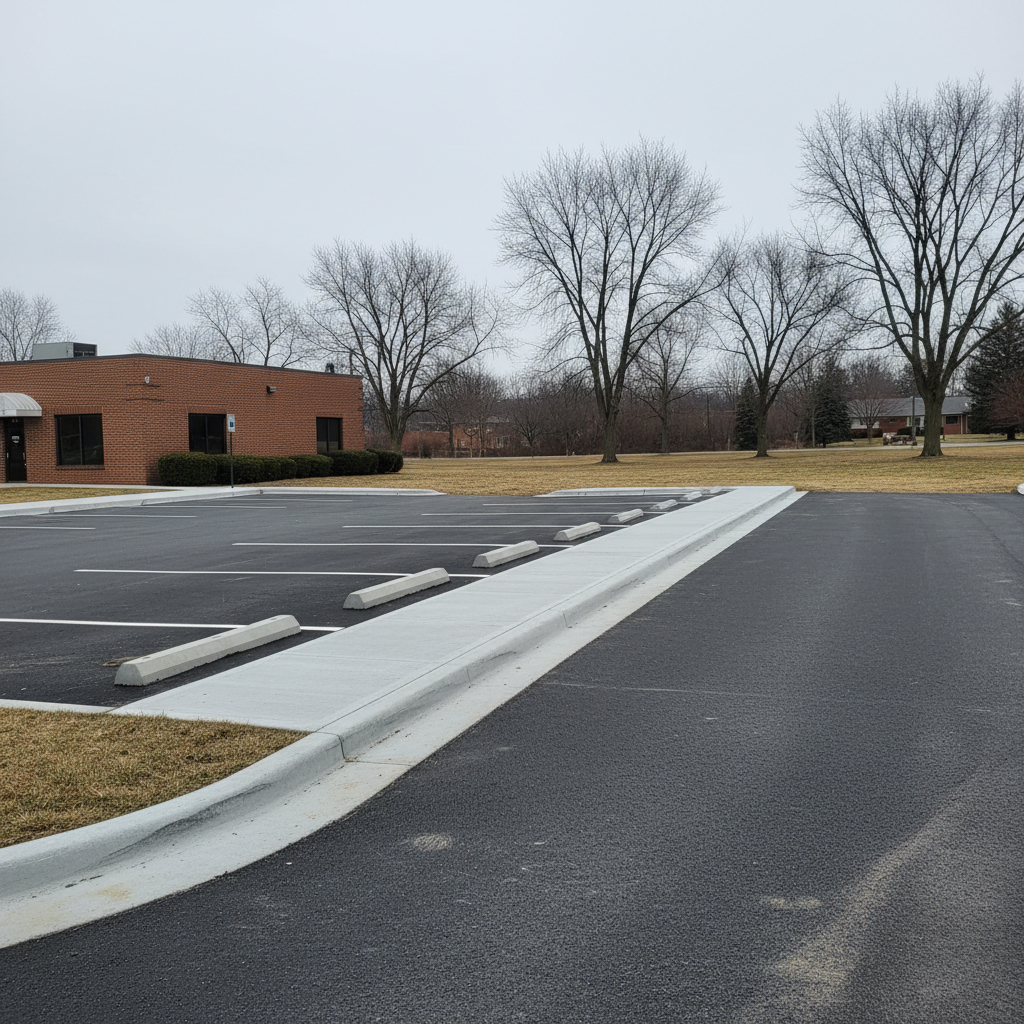
Concrete looks simple once it's poured and gray and flat. Getting it to stay that way for twenty years is where most contractors fall short, and most homeowners have no way to tell the difference between a good pour and a bad one until the first winter after it's in. Here's what actually separates the two, and what to ask before you sign anything.
Start with the license and the insurance, not the price
Ohio doesn't require a statewide license for concrete flatwork the way it does for electrical or plumbing, but most cities and counties around Cincinnati still require a permit for driveways, slab foundations, and anything touching a right-of-way or setback line. Ask who pulls the permit. If the answer is "you don't need one for this," that's worth a second opinion, especially for a driveway apron that ties into a public street or a retaining wall over 4 feet. Ask for proof of general liability insurance too. A slab failure is annoying. A worker hurt on your property with no coverage behind the contractor is your problem, not theirs.
What a real bid actually spells out
A lot of quotes are one line: "Pour 20x20 patio, $X." That tells you nothing about what's under the concrete or what's holding it together. A bid worth comparing should tell you the slab thickness (4 inches is standard for patios, walkways, and steps; driveways that see regular vehicle traffic should run 4 to 6 inches, especially if you're parking anything heavier than a sedan), what's going under it (a compacted gravel base, usually 4 inches minimum, not just graded dirt), and whether it's reinforced with rebar, wire mesh, or fiber mesh mixed into the concrete itself. Rebar costs more and holds a slab together better if the ground underneath shifts, which in this region it will. Wire mesh is cheaper and fine for lighter-use slabs if it's actually pulled up into the middle of the pour instead of left sitting on the gravel, which is a common shortcut that makes it almost useless.
Ask about control joints. These are the straight lines cut into a slab every 8 to 10 feet, and they're not decoration. Concrete cracks as it cures and shrinks, and a joint gives it a planned place to do that instead of a random one across the middle of your patio. On our jobs we saw-cut joints within 24 hours of the pour, before the slab has decided where it wants to crack on its own. If a contractor doesn't bring up joints unprompted, ask why.
Cincinnati's ground works against you if the base isn't right
Hamilton County and most of the surrounding counties sit on heavy clay. Clay soil swells when it's wet and shrinks when it dries out, and that movement is the single biggest reason concrete heaves, settles, or cracks unevenly a few years after it's poured. A proper gravel base, compacted in layers and not just dumped and leveled, gives the slab somewhere stable to sit even as the clay underneath it moves a little with the seasons. Skip that step to save a day of labor and you're buying yourself a problem in three or four years instead of twenty.
Then there's the freeze-thaw cycle. Cincinnati doesn't get one hard freeze and stay there, it swings above and below 32 degrees repeatedly from December through March. Water that gets into hairline cracks or under a poorly sealed slab expands every time it freezes, and that's what turns a small crack into a chunk missing from your driveway. Deicing salt makes it worse by drawing moisture into the surface and causing scaling, that flaking, pitted look you see on a lot of older driveways around Hyde Park and Oakley. Air-entrained concrete, which has microscopic air bubbles mixed in to give that trapped water somewhere to expand without blowing the surface apart, matters a lot more here than it would in a warmer climate. If your contractor isn't using an air-entrained mix for anything that sits outside through winter, ask why not.
If you're on a hillside lot, which isn't rare in a city built across this many ridges and valleys, retaining wall footings need to go below the local frost line and often deeper depending on the slope and the soil pressure behind the wall. This is not a spot to save money on depth.
Older neighborhoods versus newer subdivisions
A lot of Cincinnati's housing stock in neighborhoods like Northside, Price Hill, and Norwood went up in the first half of the last century, and the concrete sidewalks and driveway aprons from that era were often poured thin, without control joints, and without much gravel base at all. Replacing a section means dealing with mature tree roots, old clay drain tile, and sometimes a slab that was never reinforced to begin with. Newer subdivisions out in West Chester, Mason, or Liberty Township are usually built over old farmland that's been graded and filled, and fill soil compacts unevenly unless it was done right the first time, which isn't always the case with production-home builders working fast. Either way, a contractor who actually looks at what's under your old slab or your new lot before quoting a price is doing more than one who measures the square footage and leaves.
What to walk away from
- A contractor who wants full payment before any work starts. A deposit for materials is normal. The full amount up front is not.
- No written contract, or one that doesn't list thickness, base depth, reinforcement, and cure time.
- Pouring concrete in a hard freeze or in the middle of a heat wave without adjusting the mix or the schedule. Concrete cured too fast in 90-degree July heat can lose strength on the surface even if it looks fine.
- No local address or no willingness to give you a couple of past job locations you can drive by yourself.
- A price that's dramatically lower than everyone else's. Thin slabs, no rebar, and no gravel base all save a contractor money, and you won't know which corners got cut until the concrete tells you.
Timelines worth knowing
A new slab is generally safe to walk on after 24 to 48 hours, but it shouldn't see car or truck traffic for at least 7 days, and it won't reach full design strength for around 28 days. Any contractor telling you to park a car on a driveway the next day either doesn't know better or doesn't care. Stamped and colored concrete needs extra time for the sealer to cure properly too, and doing that step in damp or humid weather, which Cincinnati has plenty of in late spring and midsummer, can trap moisture under the sealer and cause it to haze or peel.
None of this is complicated, but it's easy to skip if nobody's checking. Ask these questions before you hire anyone for driveways, patios, steps, or a retaining wall, and you'll weed out most of the contractors who shouldn't be pouring in this city. You can see more about how we handle base prep, reinforcement, and joint layout on our own jobs at Bedrock Concrete & Masonry.